
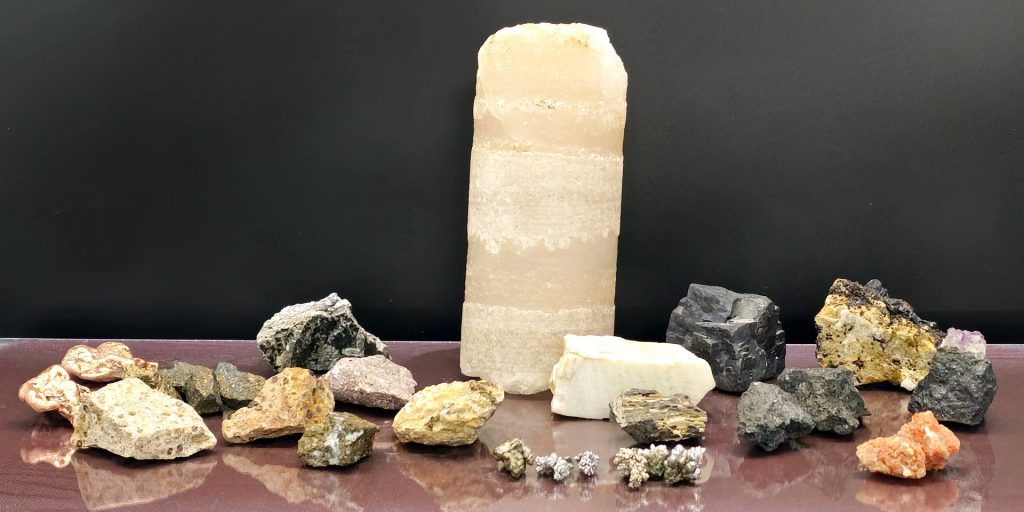
What are Critical Minerals?
Critical minerals are natural mineral resources that are essential to the economy or national security of the United States, and whose supply chains are vulnerable to disruption. The official definition, according to the Energy Act of 2020 and the U.S. Geological Survey, designates any mineral, element, substance, or material as “critical” if it meets three main criteria:
- Essential to the economic or national security of the United States: The mineral must play a key role in important industries, such as energy, defense, or advanced manufacturing.
- Vulnerable supply chain: There must be a significant risk that the supply of this mineral could be disrupted, whether due to geopolitical issues, trade restrictions, or other factors.
- Essential function in manufacturing: The mineral must be necessary for the production of products that are important to the economy or national security, such as batteries, electronics, or renewable energy technologies.
The Secretary of the Interior, through the USGS, periodically reviews and updates the official list of critical minerals based on these criteria. The list specifically excludes fuel minerals (like coal, oil, and natural gas), water, and common construction materials (like sand and gravel).
The current list of critical minerals was established in November 2025.
Why are Critical Minerals Important?
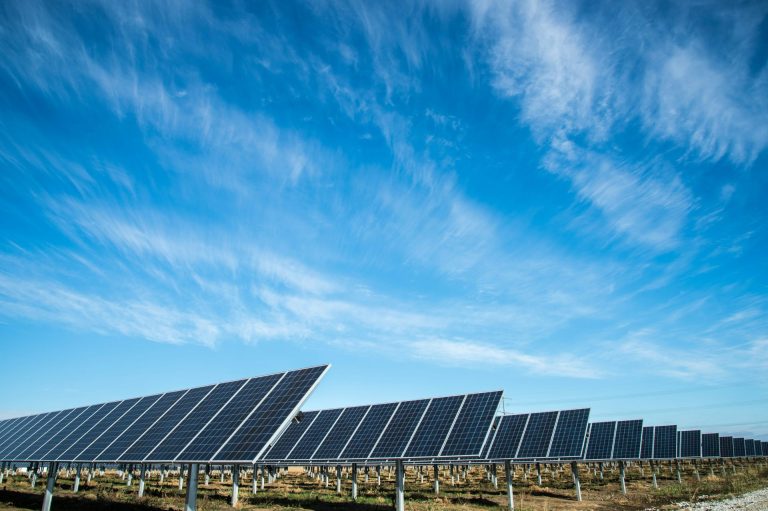
Critical minerals are vital for manufacturing advanced technologies, including renewable energy systems, defense equipment, electronics, and transportation infrastructure.
For example, rare earth elements are needed for wind turbines, batteries, and high-tech devices, while copper and aluminum are crucial for electricity networks. Their importance has grown as green and digital technologies require significantly increased mineral inputs.
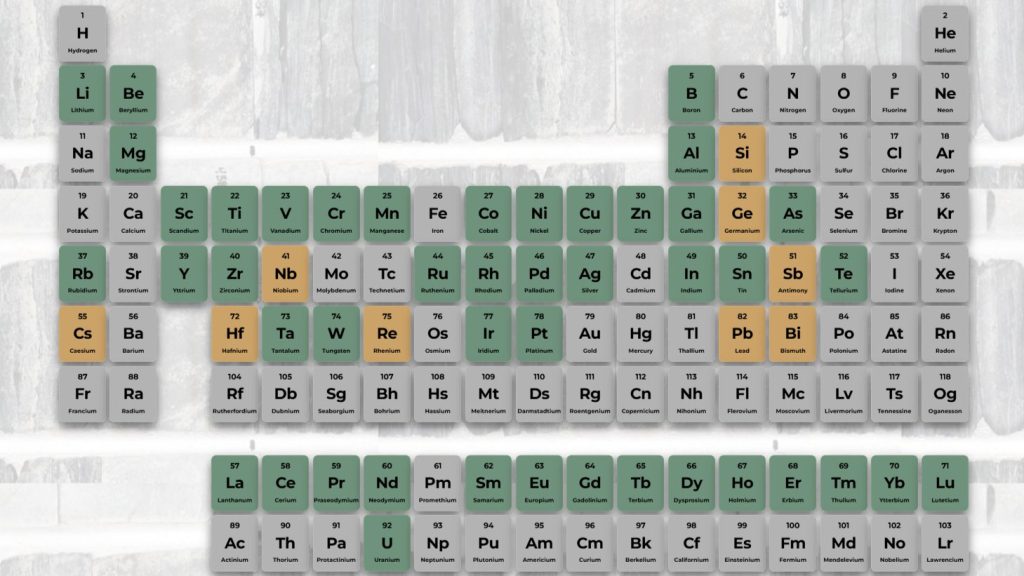
Critical Mineral Periodic Table
We created an interactive critical mineral periodic table to be used as an educational tool for learning. People can use the table to learn about which elements are relevant to critical minerals, what Michigan geological formations they are related to, and common products that rely on critical minerals.
Critical Minerals in Michigan
USGS Earth MRI
The USGS Earth Mapping Resources Initiative (Earth MRI) is a national program designed to enhance understanding of the United States’ geology and identify areas with potential for undiscovered critical mineral resources essential for the economy and national security. It modernizes mapping of the nation’s surface and subsurface by collecting high-quality geologic, geophysical, and topographic data through new geologic mapping, airborne geophysical surveys, and lidar technology. This collaborative effort involves the USGS working closely with state geological surveys and other partners to deliver publicly available data that informs responsible resource development and planning for the nation’s evolving needs.
For a deeper dive into the Earth MRI initiative and its resources, please visit the MGS Earth MRI page where you can learn about past and present Earth MRI projects.

Michigan's Critical Mineral Recycling Program
In 2024, the Critical Minerals Recycling Grant program was launched in Michigan with the purpose of advancing research and development into practical ways we can increase the reuse and recycling of lithium batteries and other critical minerals. In 2024, Critical Minerals Grants were awarded to Michigan State University (MSU), the University of Michigan, and Lawrence Technological University’s Centrepolis Accelerator:
Centrepolis Accelerator at Lawrence Technological University was awarded $2,282,667.67 to increase the purity of recyclable outputs and the efficiency and safety of processing batteries for critical mineral recovery by leveraging artificial intelligence technology to support the development and demonstration of automation used in disassembly, sorting, and processing of the end-of-life batteries from consumers, electric vehicles, and other products. More Information.
University of Michigan was awarded $1,485,037 to develop and demonstrate a 500 kilowatt-level, grid-tied energy storage system using second-life batteries from electric vehicles. The project will result in a full-power onsite demonstration at the Flint/Saginaw Electrical Joint Apprenticeship Training Committee in Flint, Michigan. More Information.
Michigan State University was awarded $706,014.63 to demonstrate an economic, scalable, and environmentally friendly route for recycling spent lithium-ion phosphate battery cathode materials with enhanced efficiency and effectiveness and evaluate the potential for manufacturing and engineering ceramic parts in Michigan. More Information.
Other Critical Mineral Resources
Recommended Websites
USGS/DOI 2025 Draft List of Critical Minerals
An overview of the 2025 list of critical minerals ranked by risk categorization. Visit Site.
U.S. Department of Energy
An overview of what’s so critical about critical minerals. Visit Site.
Critical Minerals Innovation Hub (CMI Hub)
The CMI Hub was established in 2013 as a sustained, multidisciplinary effort to develop solutions across the materials life cycle as well as reduce the impact of supply chain disruptions, and price fluctuations. Visit Site.
Critical Materials Collaborative (CMC)
The CMC is a mode of connection created by the U.S. Department of Energy (DOE) to improve and increase communication and coordination among DOE, government agencies, and stakeholders working on critical materials projects. Visit Site.
USGS Earth MRI
USGS Earth MRI homepage for learning about efforts to map the nation’s surface and subsurface. Visit Site.
USGS Educational Activity – Periodic Table of Critical Minerals
An educational activity for discovering what and how critical minerals are used in everyday items. Visit Site.
International Energy Agency (IEA)
Explains how critical minerals are essential for clean energy technologies and the energy transition, highlighting their increasing demand, supply risks, and the need for sustainable and diversified mineral supplies worldwide. Visit Site.
USGS Critical Mineral Mapping Initiative
The Critical Minerals Mapping Initiative (CMMI) is a partnership between the USGS, Geoscience Australia, and the Geological Survey of Canada formed in 2019 to improve knowledge of critical mineral resources and discover new deposits through integrated research and mapping. Visit Site.
American Geosciences Institute – Education GeoSource
Search American Geosciences Institute’s Education GeoSource educational resource database for information related to critical minerals. Visit Site.
USGS Critical Mineral Atlas
Interactive Atlas of Critical Minerals showing where critical minerals are produced. Visit Site.